
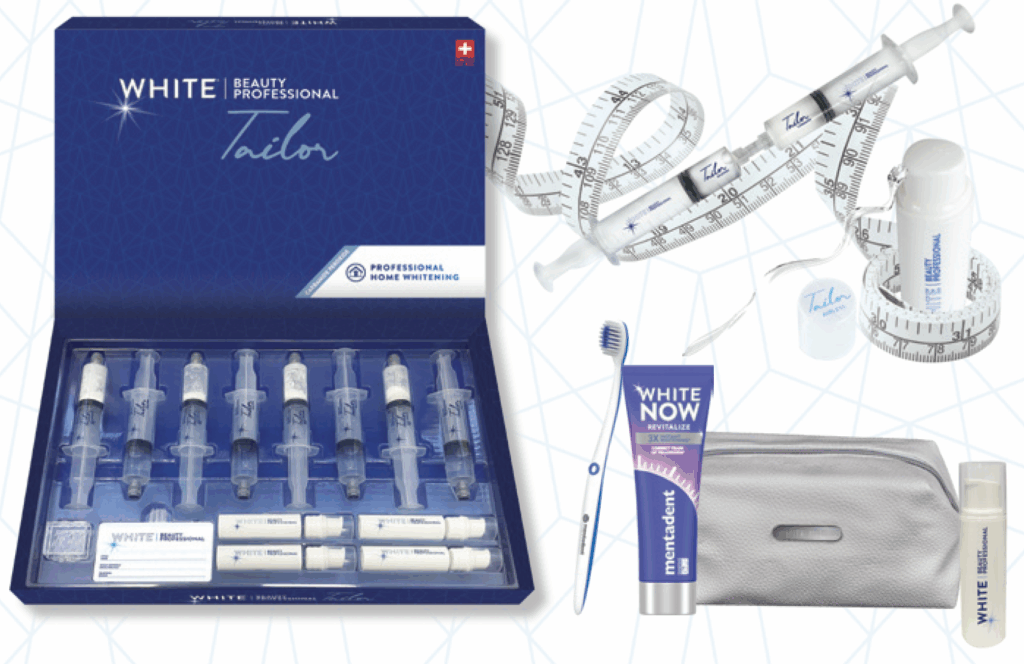
For our whitening products, we wanted the care and attention we put into developing and creating our formulations to also emerge from the tools we make available to patients: for this reason, we chose airless bottles for our line of professional home whitening treatments.
 WHY CHOOSE AIRLESS PACKAGING?
When developing a new product, the main objective is to preserve its properties over time. This is why we focused on an advanced packaging system, capable of protecting the whitening gel from external agents, guaranteeing itsintegrity and durability.
THE BENEFITS OF THE AIRLESS SYSTEM
Maximum protection from contamination
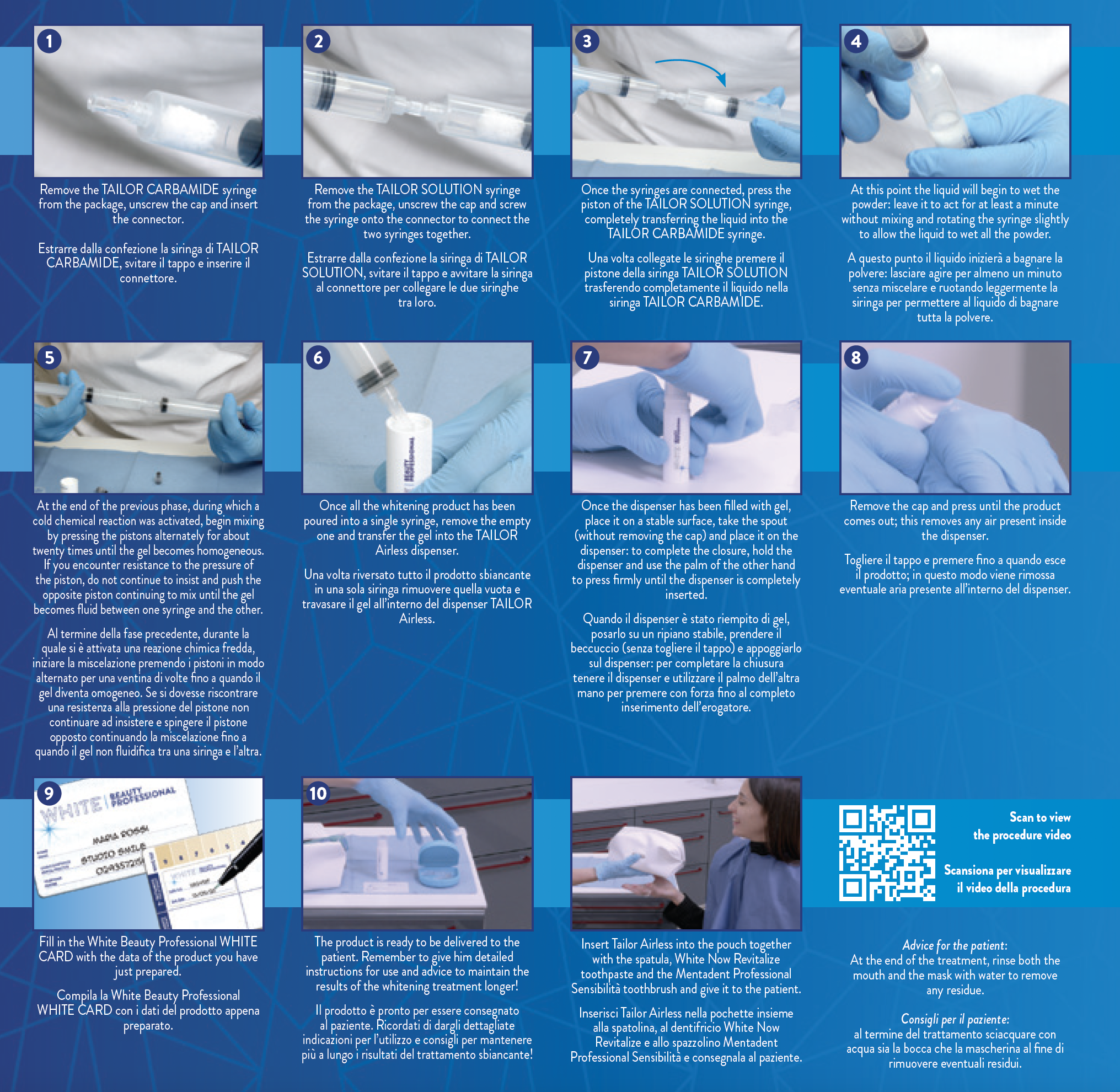
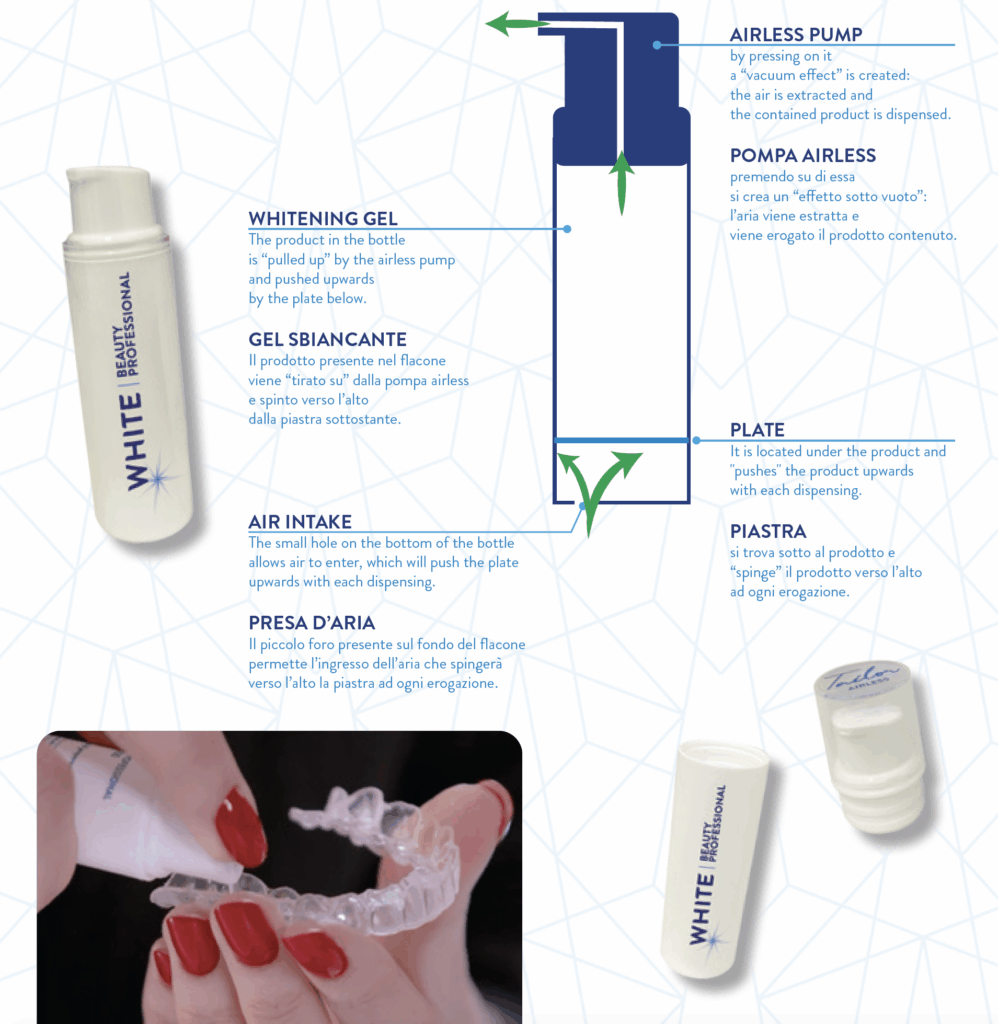
Airless technology is based on a vacuum system thatallows the product to be dispensed without exposure to air. The Tailor airless dispenser, once loaded with the whitening gel directly by the professional who has just formed it, is hermetically sealed, isolating the gel from the air, keeping it stable and pure for a long time and at the same time ensuring easy and totally hygienic dosing,allowing the patient to carry the product with them anywhere and without problems.
PRATICALITY AND ZERO WASTE
Easy to use, clean and precise in dosing: airless dispensers guarantee an optimal user experience. The content is dispensed uniformly down to the last drop, avoiding waste and ensuring the same quality from the first to the last application.
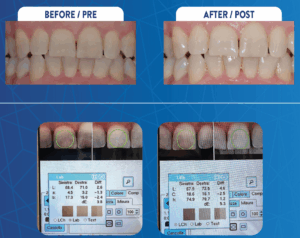
The first studies carried out with spectrophotometric analysis have demonstrated the efficacy of the product (table 1), determining significant variations in line with the changes that increase the patient’s perception of teeth whitening. In particular, teeth whitening must lead to an increase in L* (increase in brightness) and a decrease in b* (reduction of yellow) and a* (reduction of red) (table 2). All variables showed a statistically significant difference (p<0.05).
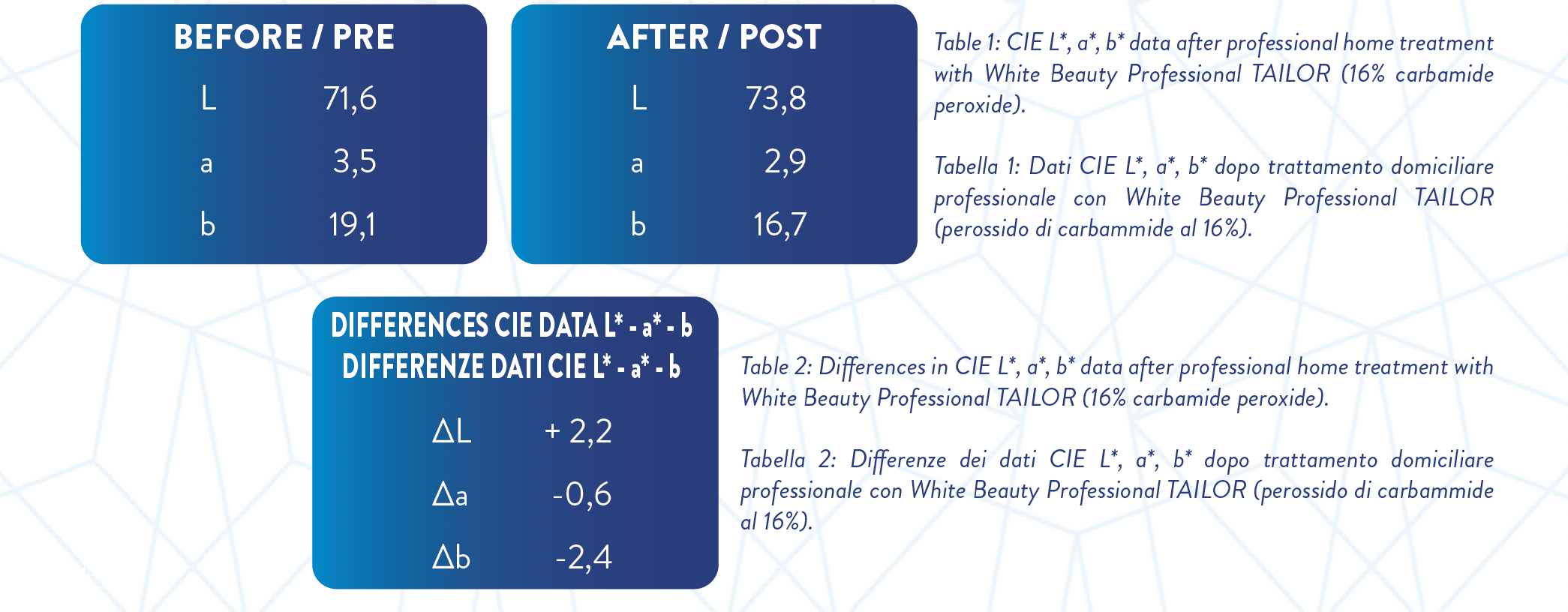
The whitening treatments were performed without adverse effects in all patients, except for dentine hypersensitivity and some cases of dysgeusia, which resolved spontaneously. In none of the cases was it necessary to suspend the treatment due to the appearance of adverse effects. The entire sample analyzed responded that they were satisfied with the results obtained.
Significant variations were also found in the case reported below: